
What is the iGaming industry, and why is it growing so rapidly?
What does iGaming mean?
The iGaming meaning refers to all real-money online gambling activities played through websites and mobile apps. This sector includes online casinos with slots and table games, sports betting, poker rooms, and other internet-based services where users stake cash.
Global iGaming market size and revenue growth
Analysts across multiple firms track how fast the iGaming industry expands each year. New markets open and legislation evolves constantly, so professionals monitor 15M news for regulatory shifts, operator launches, and technology updates. The table below compares recent revenue estimates, projected compound annual growth rates, and forecasts through the 2030s to show the sector’s scale and trajectory.
| Metric | Mid-2020s estimate | CAGR range | 2030+ forecast |
|---|---|---|---|
| Global online gambling revenue | 78–95 billion USD | 10–12% | 150+ billion USD by 2030 |
| Long-term projection | — | 8–11% | 250 billion USD by mid-2030s |
Ecosystem of the iGaming market: who is who
The iGaming industry relies on several core players who together deliver betting and casino services to millions worldwide. Each type fills a specific role that helps operators attract users and keep games accessible. To explore a comprehensive directory of verified operators, game providers, payment processors, and aggregators, visit iGaming companies, where you can research potential partners or benchmark competitors across every segment.
| Participant Type | Function Description |
|---|---|
| Online casino | Hosts slots, table games, and live dealer games so players can bet real money from desktop or mobile. |
| Bookmaker | Offers odds on sports, eSports, and other events for bettors to place pre-match and in-play bets. |
| Game provider | Develops slots, table games, and live dealer software licensed to multiple casino brands. |
| Affiliate | Drives traffic to casinos and bookmakers through review sites and earns commission per referred player. |
| Payment provider | Processes deposits, withdrawals, and currency conversions between banks and betting accounts. |
| Aggregator | Bundles hundreds of games from different studios into one catalog for casinos to plug in quickly. |
| Media partner | Streams matches, shares odds, and embeds betting widgets to reach sports fans directly. |
Strong leaders and decision-makers who shape strategy and drive growth stand behind every successful brand. If you want to learn about key industry figures, read their biographies or discover contact details for networking, check out iGaming personas for profiles and interviews with executives, founders, and influencers across the iGaming sector.
Regulation and legalization: iGaming on the world map
Companies in the iGaming industry split global territories into three regulatory categories that shape their commercial strategies and compliance investments. Here are the main ones.
| Description | Typical GEO examples | Typical operator approach |
|---|---|---|
| White markets have established licensing frameworks that allow legal online gambling | United Kingdom, Malta, Sweden, Ontario, New Jersey | Obtain local licenses, pay taxes, comply with advertising rules, and publish responsible gambling tools |
| Grey markets lack clear online gambling laws, and enforcement remains inconsistent | Parts of Latin America, several African countries, and some Asian territories | Accept traffic without local licenses, rely on offshore registrations, and operate until regulations change |
| Black markets explicitly prohibit online gambling and actively block or prosecute operators | United Arab Emirates, most of mainland China, Qatar, and certain US states | Avoid accepting players, blocking IP ranges, or facing legal risks if detected |
Key iGaming licenses and jurisdictions
Regulatory frameworks mean a lot for the iGaming definition. In this sector, operators must get permits to run websites for real-money casinos and betting. Licensing authorities control thousands of sites worldwide.
- Curaçao grants permits. These let operators launch casino and sports betting sites. Compliance costs stay low;
- Malta Gaming Authority (MGA) issues European Economic Area licenses. These licenses have consumer protection and anti-money-laundering rules;
- The UK Gambling Commission (UKGC) sets standards for game fairness, advertising, and fund segregation. It uses requirements for market entry in Britain;
- The Gibraltar Regulatory Authority manages international operators. Its framework lets these companies serve markets under one system. White-label options are common;
- The Kahnawake Gaming Commission gives permits to operators. Many North American and crypto-focused brands use these licenses.
Traffic arbitrage and affiliate marketing in iGaming
Many affiliates use the gambling and betting industry because it gives access to specific commercial advantages via three payment models (Revenue Share, CPA, and Hybrid) that most other digital niches do not. When affiliates understand what is iGaming, they can break audiences down by product preference, region, and spending patterns. This lets them target campaigns with precision and get higher conversion rates.
- High lifetime value. One casino user who joins from an affiliate link can make dozens or even hundreds of deposits over several years. Affiliates get commission streams that last well beyond the first click;
- Recurring revenue share. Operators pay affiliates a percentage of net gaming revenue every month. This allows ongoing income, as long as the referred players keep playing;
- Global reach. iGaming sites accept users from many countries. Affiliates can scale their campaigns to reach North America, Europe, Latin America, and Asia-Pacific at the same time;
- Bonus-driven sign-ups. Cash gifts and free spins typically work as incentives for new users. These bonuses reduce the barrier to entry, which leads to higher registration rates and sales cycles;
- Cross-sell opportunities. A referred account can get commissions from casino games, sports betting, and poker activity. As a result, affiliates can increase their earnings per user.
CPA, RevShare, and Hybrid payout models
Affiliates who send traffic to online gambling sites usually get paid through three structures. Each structure has timing and risk, as well as specific pros and cons.
| Model | When the webmaster gets paid | Pros | Cons |
|---|---|---|---|
| CPA | After a referred user deposits and meets the minimum spending requirements | Predictable one-time flat fee per qualified player | No ongoing income from that user’s future activity |
| RevShare | Monthly share of net gambling revenue from all referred active users | Steady monthly income that grows with user lifetime activity | Delayed and variable earnings that depend on player losses |
| Hybrid | One smaller upfront CPA fee plus an ongoing smaller RevShare percentage | Combines immediate cash flow with recurring monthly passive income | Typically, lower rates on both components compared to pure CPA or RevShare |
Webmasters and traffic arbitrageurs should visit the affiliate programs section at iGaming affiliate programs to choose the best offers for monetizing their traffic. This directory allows you to compare commission structures, explore available markets, and identify top-performing campaigns that match your audience.
Knowledge base: how to become an expert in iGaming
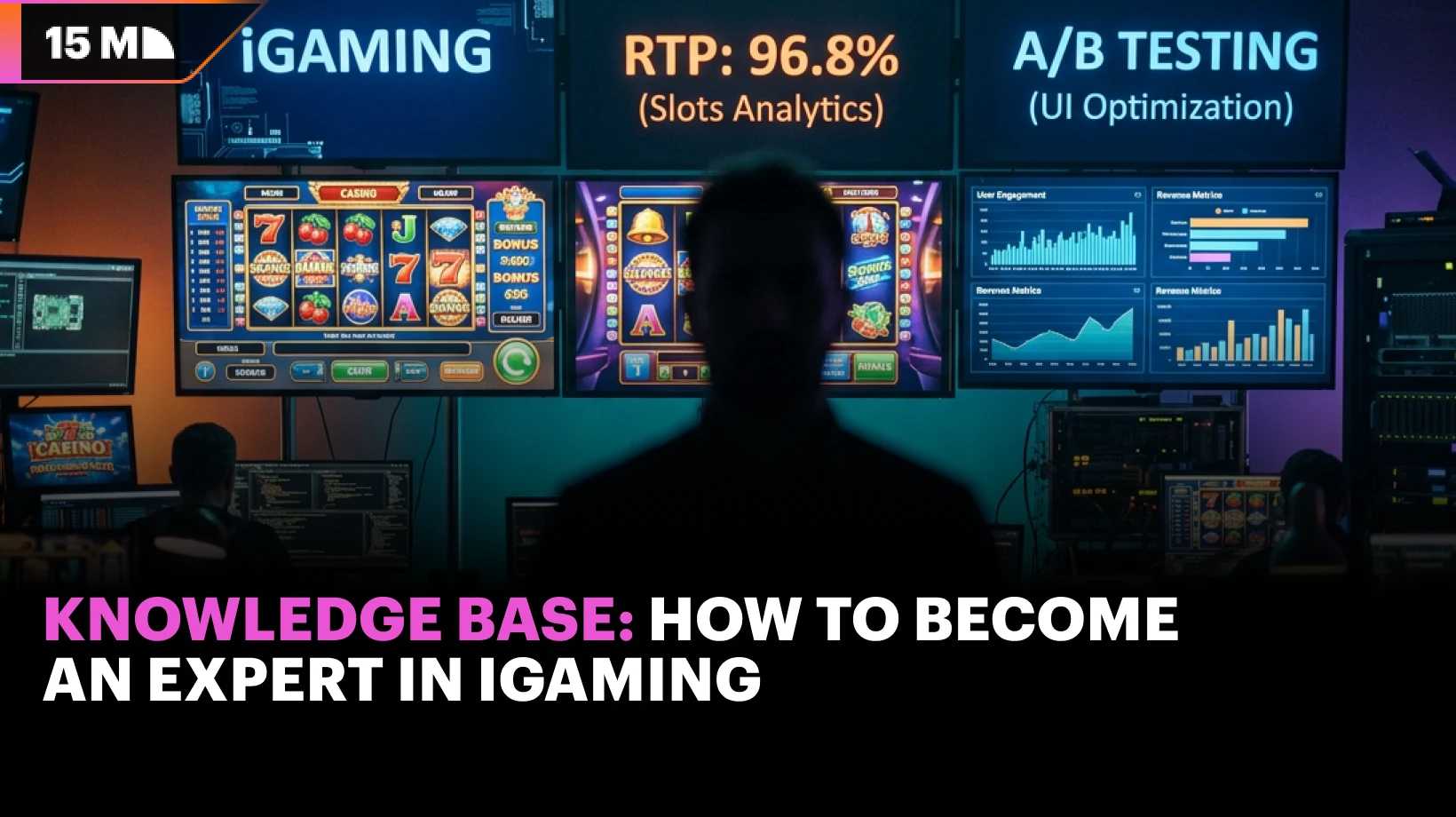
To ensure consistent growth, it is important to understand the meaning of iGaming, the mechanics of games, and the player value. It is difficult for operators and affiliates to develop long-lasting and lucrative strategies without these concepts, and audiences ultimately will not stick around.
Essential skills: slots math, retention, VIP management
The iGaming industry requires specialists who can analyze revenue mechanics, player loyalty, and high-value account strategies to keep sites profitable and competitive. Here is what to keep in mind:
- Basic RTP and volatility. Comprehension of the Return to Player percentages and volatility will affect the operation’s revenue. The correct RTP balance leads to correct game placement and enjoyment while meeting revenue goals;
- Bonus logic. Promo costs can be limited by designing bonus caps, wagering requirements, and implementing time limits. This will help ensure promotional costs are managed;
- Retention funnels. Extend the player life by lowering the churn rate and accomplishing the first and second deposit, as well as the reactivation milestones;
- VIP segmentation. Maximize spending through individually designed offers for high-rollers by deposit and betting frequency;
- Analytics. Quickly identify trends by monitoring behaviors and/or actions against goals;
- A/B Testing. Gradually increase conversion by testing layouts of the lobby and modifying the incentive and action buttons.
Learning via 15M articles and in-depth essays
Different content formats on 15M help readers move past surface-level answers when they ask what is iGaming and want deeper industry knowledge. For practical guides that cover everything from slot mechanics to payment processing and GEO targeting, explore iGaming articles, where step-by-step tutorials simplify complex topics for both beginners and intermediate professionals.
- Beginner guides break down core concepts like house edge, odds margins, and vertical structures so newcomers understand how casino sites and bookmakers actually function;
- Product breakdowns dissect specific platforms, payment rails, and game mechanics to show which features separate top operators from the rest;
- Interviews give inside perspectives from founders, affiliates, and developers who built the systems behind modern betting and casino sites;
- Analytical essays explore revenue models, regional regulations, and tech shifts that explain why the sector grows at double-digit rates each year.
When you need deeper analytical insights, strategic thinking, and long-form narratives about market evolution, visit Essays . This category provides expert columns and thought leadership pieces that examine the philosophical and business dimensions of online gambling.
Media and networking: iGaming life beyond the screen
Personal connections still matter in the iGaming industry. Digital operations run most processes, but in-person meetings build trust. Media outlets cover operator news. Trade shows and conferences bring together providers, affiliates, regulators, and brands. At these events, participants share strategies and make new partnerships.
Industry media, shows, and case breakdowns
Professionals and operators track how the iGaming definition shifts in real-world settings through specialized content formats that break down live deals and tech updates. These resources help anyone follow what changes across casinos, bookmakers, and affiliate networks in 2026. If you prefer audio and video formats, tune in to 15M Shows for podcasts, video interviews, and case-study breakdowns that feature real campaigns, conversion metrics, and insider commentary from industry leaders.
- Podcasts report on M\&A transactions, announcements about partnerships, and migrations. Each week, listeners hear which companies enter markets or leave ones;
- Video interviews include executives. Each explains how their projects use the iGaming definition. Subjects include integrations and payment rollouts;
- Case-study breakdowns look into campaigns. They show conversion metrics and traffic sources that helped brands succeed;
- News digests collect updates, launches, and stories. Summaries are short. Readers find every change without searching sources.
Conferences and events for global networking
Face-to-face meetings at trade shows stay central in the iGaming industry. Companies use these events to build partnerships. They find suppliers. They track regulation changes across markets. To plan your networking calendar and discover both flagship conferences and smaller regional meet-ups, check the full schedule at iGaming events calendar, where you can filter by location, date, and focus area.
| Event | City/Region | Main Focus | Who Should Attend |
|---|---|---|---|
| SiGMA | Malta, Europe, Americas, Asia | Regulation, affiliate marketing, and new territories | Operators, affiliates, compliance teams |
| ICE London | London, UK | Game studios, sports-betting tech, and payments | Product managers, developers, and casino brands |
| iGB Affiliate | Amsterdam, Netherlands | Traffic acquisition, media buying, SEO | Affiliate marketers, traffic brokers |
| SBC Summit | Lisbon, Barcelona | Sports betting, odds technology, and data | Bookmakers, live-odds traders, sportsbook platforms |
Prospects of the iGaming industry development
Technologies and blockchain solutions alter the operations of the industry, including casinos and sportsbooks. The integration of these technologies is not limited to the increase in players. They also assist in managing risks in the market. Below are the key innovations.
- AI with advanced personalization and fraud detection. An AI-integrated personalization and fraud detection system utilizes machine learning to offer game suggestions. These systems modify bonus offers in real-time. AI spots fraud through duplicate registrations and payment discrepancies. This helps reduce the cost of fraud by 30% and guarantees compliance with Anti-Money Laundering (AML) regulations;
- Evolution of Web3-integrated crypto-casinos. The evolution of Web3-integrated crypto-casinos facilitates automated payouts through smart contracts. Smart contracts ensure fairness in gaming on the blockchain. Crypto casinos achieve payouts in under 10 minutes as compared to traditional banks, which take 3-5 days. Transaction costs also reduce by 50% to 70%;
- Gamification, crash games, and the integration of VR/AR. Gamified features, crash games, VR, and AR deliver high user engagement. The introduction of a mission system and leaderboards extends user engagement by 40%. Crash games attract a myriad of mobile-first players due to short 10-second rounds. Engagement on the VR casino services is also higher, with 2-3 times the average bet as compared to the traditional casino.
15M for iGaming: your reliable hub in the industry
15M is an ecosystem for iGaming professionals. Users get news, company data, profiles of industry personas, affiliate programs, and event listings in one location. 15M brings each resource together so users can save time and access tools in one place.
How 15M accelerates growth and networking across the industry
The usage of all site sections works together to help operators, affiliates, and suppliers grow their networks. You can gain access to partners and scale revenue streams in markets across the world.
- Research competitors in detail. Benchmark your brand against other operators in the casino, sports betting, and poker industries. This process helps you find market gaps and improve your positioning;
- Find decision-makers. Get contact details and profiles at studios, affiliates, and bookmakers. Make partnerships quickly;
- Track leaders and brands as they appear. Spot acquisition or collaboration opportunities before markets become saturated;
- Compare affiliate programs side by side. Identify affiliate networks with the commission structures and brand portfolios for your traffic sources;
- Follow news updates. See how the iGaming definition continues to expand. Operators introduce verticals, and regulators revise licensing requirements;
- Read articles on segments. Learn how dealer streams, games, and solutions change the design of gambling services;
- Go to events to meet operators, suppliers, and affiliates in person. Negotiate partnership terms directly with peers;
- Find job listings. Hire traders, creators, or experts. Apply for positions across the iGaming sector;
- Make your company more visible by claiming and updating your profile. Partners and media outlets will get data when they research your brand.
Conclusion
Understanding iGaming means recognizing how technology, finance, and marketing converge to deliver online gambling and betting. Staying informed about regulation, revenue models, and tech shifts helps players and professionals succeed. Bookmark 15M.com for the latest insights and become part of the 15M community in order not to miss any industry innovation.
FAQ
What is iGaming in simple words?
The term means all types of online gambling with real-money bets. It includes casinos, bookmakers, poker rooms, bingo halls, and lotteries. People can access these through websites or apps. Any device with internet access can be used to reach them, from anywhere in the world.
How do online casinos and bookmakers make money?
Casinos get profit from the house edge in games. Bookmakers make money through the margin on odds. These advantages are the main sources of revenue in the iGaming industry that generate income over time.
Is iGaming growing faster than land-based gambling?
Online segments grow faster and outpace venues in most markets. Global forecasts extend through 2030 and show annual growth each year. Smartphone access and connectivity drive this surge.
Which iGaming segments are most popular worldwide?
Sports betting and online casino services capture the largest share of global revenue. Both verticals reflect the core iGaming meaning: real-money gambling delivered through internet platforms. Poker, bingo, and eSports follow behind these two leaders.