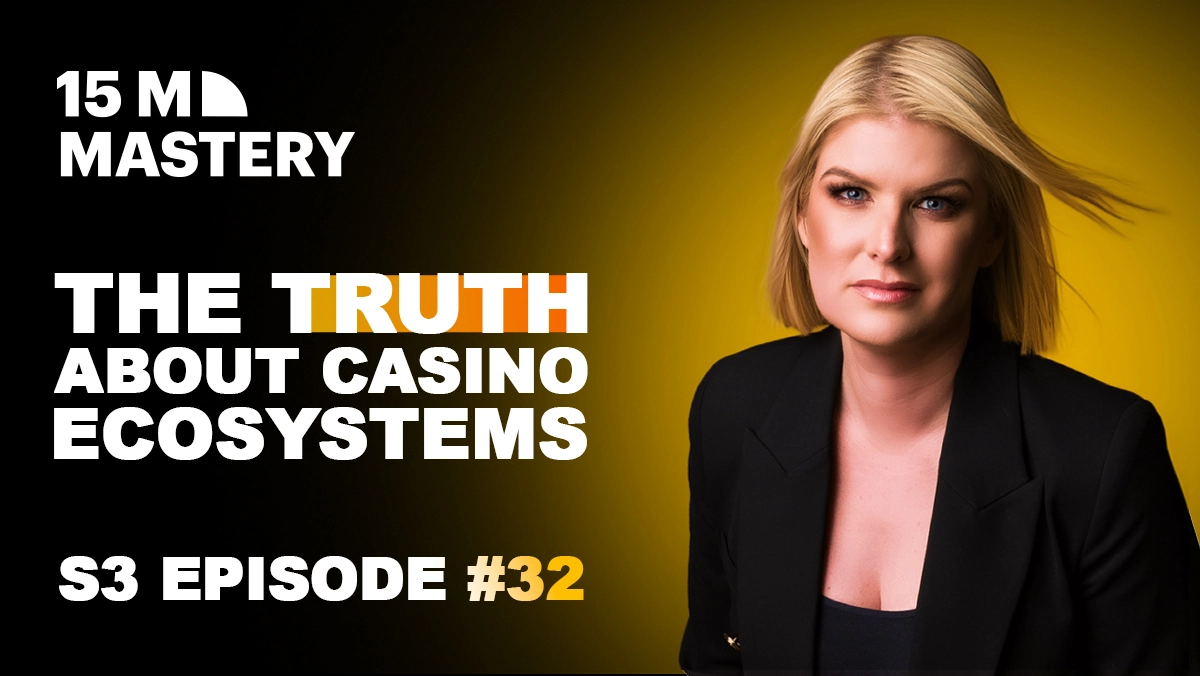
The Casino Ecosystem Test Most Operators Ignore
Watch and listen to Us on
Where the Real Problems Show Up First
For Sasha Boerma, the true state of a casino ecosystem is not revealed in dashboards first. It shows up in one simple place: whether players stay, whether they leave, and what they say while they are still inside the experience.
Her advice sounds almost too basic, but that is the point. Most teams do not do it.
If you want the fastest, clearest signal of player experience, sit in your support chat. Read the complaints, the confusion, the repeated questions, and the moments where players feel stuck. Your chat is not a support function. It is a live research feed.
Data Feels Like a Mountain Until You Start Small
Sasha’s second point is structural. In many African markets, data is available but underused. CRM is still missing in more operations than people would expect, even in South Africa.
The mistake is treating CRM as a huge transformation project. It does not have to start that way.
Start with basics. Segment by pay cycle. Segment by game preference. If crash players typically deposit around month-end, build communications around that reality. In Africa, SMS still matters. The goal is not sophistication. The goal is relevance.
Build a calendar. Break it down. Make it doable.
Player Experience Breaks When Acquisition and Retention Do Not Match
A player-centric ecosystem depends on continuity. If your acquisition channels promise one thing and the product experience delivers another, players churn fast.
Sasha highlights a common blind spot from her affiliate background. Teams push hard to acquire without always understanding who is being acquired. What audience is the influencer speaking to. What niche is the affiliate page building. What expectations are being set before the first click.
Then the player arrives and the content, lobby, support, and CRM feel disconnected.
That is not a marketing issue. It is a system issue.
Basic Operational Visibility Is Still Missing
One of Sasha’s most striking examples is how often platforms do not even expose simple player insights. She describes spending days trying to find top winners and top losers, only to learn the feature did not exist and required a ticket with a long wait time.
If you cannot immediately see who is winning, who is losing, and who needs attention today, you cannot run a player relationship strategy. You are operating blind.
Tools and plugins can patch gaps, but the deeper message is that player-centricity starts with visibility.
Segmentation Is Not Optional, Especially in South Africa
When Sasha researched South African operators, one theme kept appearing: the rise of women as a major casino segment, in some cases approaching half the player base.
Yet campaigns, games, and creative are not catching up. This is where cultural context becomes strategy.
What may feel uncomfortable or “too direct” in one region can be welcomed in another. Local markets have their own language of celebration and identity. Ignoring it is not neutrality. It is missed relevance.
Collaboration Is a Growth Lever, Not a Soft Idea
A casino ecosystem is not only product and marketing. It is the full loop: affiliates, acquisition, CRM, content, and support.
Sasha points out how often sponsorships and partnerships exist in isolation. A brand sponsors a team or an influencer, but never carries that story into onsite content, CRM messaging, or support conversations.
If internal teams are not aligned, players feel that fragmentation. If they are aligned, every touchpoint reinforces the same identity.
Cultural Nuance Is Hard to Price, But Easy to Feel
Some cultural signals cannot be tied neatly to revenue in advance. Sasha is clear about that. You cannot always translate cultural nuance into immediate financial attribution.
But you can measure something earlier: resonance.
When a brand uses language, references, and shared national signals that feel familiar, players feel understood. In South Africa, that can be as universal as rugby culture or as simple as using terms that carry local meaning beyond one tribe or language group.
People stay where they feel seen.
The Outcome
Sasha’s message is not that growth requires a bigger budget. It requires a more connected system.
Listen to chat. Use basic segmentation. Align acquisition with retention. Give teams visibility. Treat localisation as strategy, not translation. And make collaboration the default, not the exception.
Do that, and the player experience stops being a guessing game. The numbers follow.
Have you enjoyed the post?
Shows
Watch next
Check out our other shows featuring other interesting guests.