


Croupier and his relative arrested in Macau for $76,000 fraud
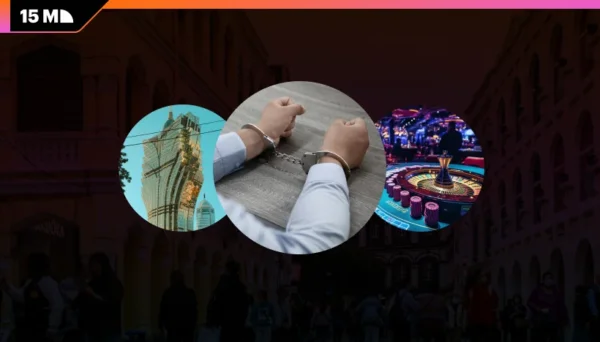
According to the police, the croupier, surnamed Ho, aged 33, worked in tandem with his relative, surnamed Zhou, aged 32. The men are related; Zhou is married to Ho’s younger sister, and it was this connection that allowed them to coordinate their actions at the gaming table.
How the trick worked
The police have dubbed the fraud scheme “10,000 for 30,000”. Zhou would approach the table where his relative was working and ask to exchange a 10,000 Hong Kong dollar chip for smaller denominations. In response, Ho would hand him six chips worth 5,000 Hong Kong dollars each, totalling 30,000 instead of the intended 10,000. The pair would pocket the difference.
The scheme relied on Ho’s abuse of his position and on the routine trust placed in croupiers during table-side chip exchanges. Such manipulation of chip denominations is difficult to spot immediately, unless the venue has a system for automatically recording every chip issued from the table.
How much they took, and for how long
The investigation established that the pair began their activities around the 25th of last month and continued the scheme for approximately five days. During this period, the total losses incurred by the casino amounted to approximately 600,000 Hong Kong dollars, equivalent to roughly 76,000 US dollars. Both participants financed the scheme from their own funds and split the profits equally between them.
What happens next
The Macau Judiciary Police announced the arrests and details of the investigation on Friday. Ho and Zhou are currently in custody, each facing a charge of fraud.
Why this keeps happening in Macau
Similar schemes involving the manipulation of chip denominations crop up from time to time in Macau’s casinos, as the gambling zone remains one of the world’s largest markets for cash chip turnover. Staff with access to the cashier’s desk and gaming tables are traditionally considered one of the main risk areas for operators; consequently, major casinos are stepping up CCTV surveillance and implementing stricter record-keeping procedures for every exchange of high-denomination chips. Cases where a relative or acquaintance of a casino employee is involved in the scheme are particularly difficult to detect at an early stage, precisely because of the lack of formal links between the participants in the company’s records.