Philippines, Thailand and Vietnam Take 14.4% of Global Small P2P Crypto Transfers
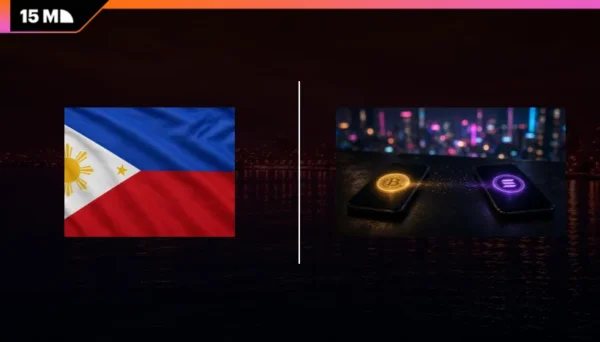
Chainalysis published the figures on September 30 as part of its 2026 regional crypto analysis. The firm classifies transfers below $10,000 as small-value P2P activity. More than four in five domestic transfers across the three countries were below $1,000.
14.4% Is 5.8 Times Their Crypto-Economy Share
The difference is unusually large. Dividing the three countries’ 14.4% share of global small-value P2P transfers by their 2.5% share of the global crypto economy gives a ratio of about 5.8 to one, by 15M’s calculation.
That comparison is based on transaction count versus overall crypto-economy share. It does not mean the three markets handled 5.8 times more crypto value.
Their transfers were also smaller than the global benchmark. Chainalysis puts the average at $618 across the Philippines, Thailand and Vietnam, compared with $1,210 for the rest of the world. That makes the average transfer about 49% lower, based on the reported figures.
Cross-Border Crypto Is Part of the Same Payment Picture
The wider regional data also shows crypto being used beyond exchange activity. Chainalysis found that cross-border stablecoin activity exceeded domestic stablecoin activity in every Central and Southeast Asia and Oceania market it analysed. Thailand had a $10.4 billion domestic stablecoin economy and Vietnam $6.9 billion, while their cross-border stablecoin markets were between 50% and more than 100% larger.
The Philippines showed a different pattern. Chainalysis linked part of its stablecoin use to remittances, alongside the country’s growth in smaller P2P transfers.
The Dataset Does Not Identify Gambling Payments
None of the 5.4 million transfers is identified by Chainalysis as an online casino deposit, sportsbook payment or gambling withdrawal. There is, however, a separate payment-layer overlap with iGaming in all three markets.
For the Philippines, 15M previously reported that a central-bank investigation had identified online casino bets being accepted through merchant identities belonging to businesses such as salons and bakeries. Some payments were as small as PHP50.
Thailand has meanwhile brought online-gambling transaction patterns into a wider framework for banks and payment providers. A separate USDT figure examined by the Bank of Thailand was not attributed specifically to gambling.
In Vietnam, investigators recently traced player deposits and withdrawals connected with Net.win through 13 bank accounts handling more than VND1 trillion in total transactions. That case involved bank transfers rather than the P2P crypto activity measured by Chainalysis.
Those are separate datasets. None provides a basis for assigning any portion of Chainalysis’s 5.4 million P2P transfers to gambling.

Have you enjoyed the news?