


Ohio Stopped Writing to Prediction Markets and Started Writing to Its Own Licensees
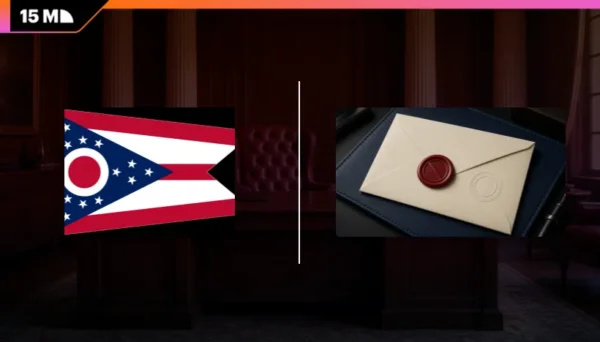
The Commission "confirmed at its October 21, 2026, meeting that it has issued cease-and-desist letters" – this time to its own sports gaming and fantasy contest licensees and applicants, who were told to stop operations and to "affirmatively report their compliance by October 30, 2026, or risk license penalties."
That deadline has now passed. The Commission had been writing to prediction markets themselves since March 2025, and on 2 October 2026 sent cease-and-desist letters to ten of them at once.
The Reach Goes Past the Operators
The order does not stop at licensed sportsbooks and fantasy operators. It extends to "suppliers, vendors and their key employees, as well as certified testing labs and integrity monitors that work with prediction markets."
An integrity monitor is paid to watch for exactly the kind of market manipulation a regulator fears. In Ohio, it can now lose its certification for working with the venues it was watching.
What a Licensee Risks
The exposure is suitability, not a fine. A reopened suitability investigation covers compliance history in Ohio or a foreign jurisdiction, and "character, honesty and integrity, and financial and business responsibility." Suspension and revocation sit at the end of that road.
The Commission is presently concerned with the "illegal gambling activity". The baseline under state law is blunt: "Under Ohio law, offering sports gaming without a license is a felony."
Why This Is Not the Same as the Other States
Analysis of the move calls Ohio "the first state to send a true cease-and-desist letter to all sports gaming licensees with potential licensing consequences", and says it "raises the stakes by placing licensed operators that partner with prediction markets on equal footing with the prediction markets themselves."
Nearly half of US states are in litigation over prediction markets. The difference in Ohio is that the pressure is applied through the licence rather than through the courts, which means it works on the parties that have something to lose in Ohio and cannot be answered by arguing federal pre-emption.
The ten platforms written to on 2 October were Coinbase, Gemini Titan, MooMoo Financial, Novig Betting, Plus500US, Polymarket, Prophet X, Robinhood Derivatives, Underdog Predict and WeBull Financial. Kalshi was not among them: it had already sued the Commission and lost in the Sixth Circuit.
One company has confirmed compliance. Two are suing, and both argue that prediction markets answer to federal rather than state oversight.

Have you enjoyed the news?