


Tashkent Shuts $4M Gambling Hub Serving 60,000 Users
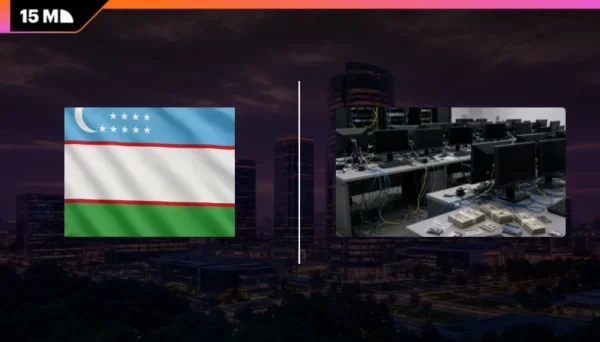
Uzbekistan’s cybercrime unit has shut a Tashkent office accused of servicing several online gambling platforms. Investigators say the operation attracted nearly 60,000 users and recorded $4 million in fund movements over six months.
The office operated from a business center in Tashkent’s Yashnabad district while presenting itself as a computer-technology consulting company. The Interior Ministry’s Department for Combating Cybercrime disclosed the operation in its September 28 statement.
Authorities said the group provided services for several online gambling platforms rather than operating around one named site. Its work included attracting users and creating the conditions needed for them to participate in online gambling.
Nearly 60,000 people were linked to the operation. The department named users from Uzbekistan, Saudi Arabia, the UAE, Oman, Bahrain, Qatar and Kuwait, as well as other countries.
Office Had Separate Cashier and Analyst Roles
Investigators found a divided internal structure inside the office. Staff worked as operators, supervisors, cashiers, analysts and reporting personnel, with managers overseeing the operation.
Specialized software and encrypted communications were used. Investigators also said the group had tools for hiding digital traces. Servers, desktop computers and laptops were seized from the premises. Police also found mobile phones, bank cards, SIM cards and cash.
Computer forensics produced the main financial figure in the case. About $4 million moved through the operation over the previous six months. The ministry did not call that amount revenue or player losses. It referred to financial movement identified from the seized equipment.
Sixteen people are involved in the case. Eleven of the main participants were detained. Investigators also found people who allegedly worked for the operation remotely, according to Kun.uz’s account of the Cybercrime Department announcement.
Tashkent Office Reached Gulf Users
The list of countries gives the case a wider footprint than Uzbekistan alone. Saudi Arabia, the UAE, Oman, Bahrain, Qatar and Kuwait were all named by investigators. Every foreign country on that list is a Gulf Cooperation Council member. Uzbekistan makes at least seven specifically identified markets in total.
The same case also involves several gambling platforms and staff working outside the Tashkent office. That points to a service operation handling users across borders rather than a setup built only for the Uzbek market.
There is one limit to that conclusion. Authorities have not said where the gambling platforms themselves were based or where their technical infrastructure was hosted.
The investigation is continuing.