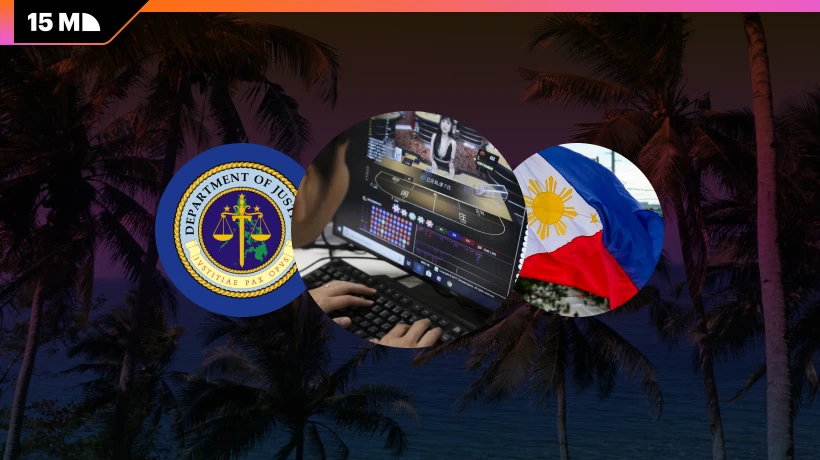

According to Justice Secretary Fredderick Vida, there are no longer any Philippine Offshore Gaming Operator (POGO) hubs left in the country. He went further to say that the government won’t tolerate offshore gaming operations in the Philippines. The statement followed a campaign that resulted in the closure of 80% of operational hubs within one month of the official deadline.


How the Ban Moved From Policy to Legal Closure
This week’s announcement is significant for its role in completing a process that started mid-2024. During his State of the Nation Address on July 22, 2024, President Ferdinand Marcos Jr. ordered the shutdown of offshore gaming operators owing to their association with crimes that went beyond gambling activities, such as financial scamming, money laundering, and human trafficking. Reuters stated then that the deadline for the shutdown would be in December 2024.
The shutdown process then transitioned from executive command to legal mandate. Republic Act No. 12312 outlawed offshore gaming operations and related activities in the country, repealed the earlier tax framework, and revoked the authority of government agencies to issue licenses or permits for POGO-related activity. What made this step important was that it made a political statement a legal prohibition.
Before the law took effect, the wind-down was already well advanced. According to Reuters, only 42 licensed firms remained in operation in July 2024. PAGCOR later said that by December 31 all 42 licenses and 18 authorized service providers had been canceled. Also, 304 operating sites had been closed nationwide.
Why the Story Is Still About Risk
The recent statement cannot be taken as evidence that all risks have now been eliminated. What the government has basically told is that legal POGOs are history, and that anything that comes after this point must be considered criminal enforcement. In essence, the issue of whether or not to regulate the industry is now irrelevant.
For the market, it does not mean a pause, a reset, or an opening for a revised licensing model. It marks a change from closure to policing. What will matter, therefore, is how well the authorities can prevent former POGO members and splinters from reappearing in small organizations.