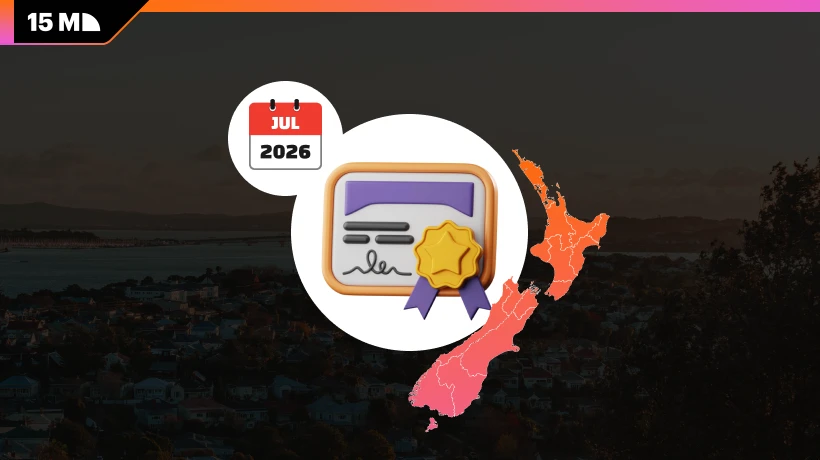

The New Zealand Parliament has progressed the Online Casino Gambling Bill to the second reading stage on 3rd March 2026. Meanwhile, the Department of Internal Affairs (DIA) has also put out indicative timelines for the rollout of changes, which begin with the Act’s expected commencement on 1 May 2026 and then move into licensing from July onwards.
The department also notes that this timing is subject to change until the bill passes all the parliamentary stages and Royal Assent is granted.
July Will Start Screening, Not a Full Market Launch
July is to mark the beginning of the three-stage process, rather than a full commercial opening. DIA’s planned process involves the expression of interest by operators, followed by an auction in September, and only then can license applications be filed in October. There will be up to 15 licences available, each for a single brand, and no applicant will be able receive more than three. Licences would run for up to three years, with a possible five-year renewal.
Such a structure makes market entry a competitive filter. This is supposed to be a capped process with elements of capital checks, compliance history, business plans, and consumer protection.
The December Deadline Is the Real Pressure Point
The tougher deadline is 1 December 2026. From that date, providers who have not applied for a license will be forced to stop providing online casino gambling in New Zealand. Those who have applied, however, will be allowed to continue operating, but will not be able to advertise their services until they are granted a license. According to DIA, legal advertising is more likely to be implemented gradually in the first half of 2027.
The scope of regulation is to go beyond licensing. For instance, Cabinet-approved proposals suggest a ban on affiliate marketing and paid endorsements, as well as stricter control over the content that can attract under-18s. Operators will be expected to provide self-exclusion options and to connect to a central register (if one is available).
Why the Market Is Being Built This Way
This policy case is linked to channelisation and harm control. Health Ministry materials state that an estimated 156,000 New Zealanders aged 15 years and over have been involved in overseas online gambling in 2023/24. Official tax data used in the same policy work found that revenue of NZ$342.5 million was earned from offshore gambling in the year to June 2023. Cabinet has also agreed to increase the online gambling duty from 12% to 16%, with an amount equivalent to 4% of GGR ring-fenced for community return from January 2027. That move is estimated to generate NZ$10 million to NZ$20 million in the first 12 months.
The takeaway here is that New Zealand is launching a small auction-based framework. Market entry is likely to come with high compliance costs, delayed advertising rights, and harm-minimisation obligations.