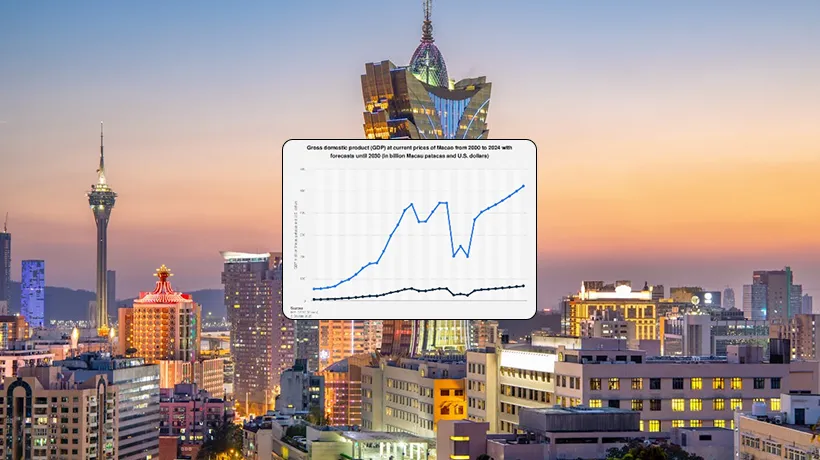

OCBC Bank economists forecast Macau’s GDP will grow roughly 3% next year. The special administrative region expanded 4.2% in the first nine months of 2025, though growth started slow. Gaming operators have upgraded their marketing approaches, particularly targeting high-value VIP players.
Mainland visitors drove much of the recovery. Stronger equity markets and major entertainment events boosted tourist arrivals throughout the year.
The economic picture shows sharp contrasts. Tourism and gaming revenues are climbing while local consumers pull back.



Why Growth Patterns Show Clear Divide
The recovery remains lopsided, what OCBC calls “externally strong but domestically weak.”
Higher unemployment rates hurt consumer confidence. The property market hasn’t bounced back. Internal spending continues to lag behind external revenue sources.
Gaming revenue hit MOP 20.1 billion monthly on average through September, up 7.1% from last year. VIP gaming now makes up 27% of total revenue. That segment has recovered to 54% of its 2019 performance levels.
Regulatory changes forced the sector to adapt. Satellite casino closures pushed operators to refine their strategies and focus more on premium players.
What Recovery Metrics Reveal
Second and third quarter GDP jumped 5.5% and 8.0% respectively. Those gains came from improved mainland economic activity and relaxed travel rules.
Total gaming revenue should rise about 5% in 2026, according to OCBC’s projections. Inbound arrivals are expected to exceed 42 million visits next year. That’s a 6-9% increase over current levels.
But there’s a catch. Spending per visitor is likely to drop as budget travel grows more popular.
The renminbi’s strength helps attract premium players. Casino operators are adapting to new market conditions faster than expected.
How Diversification Plans Take Shape
Macau’s government wants to reduce reliance on gaming through its “1+4” industry strategy. The plan focuses on building a broader economic base over time.
Integration with Hengqin aims to create new revenue streams beyond casinos. Officials hope this will make growth more stable and sustainable long-term.
The 2026 outlook sits below this year’s projected 5% expansion. Yet economists see the slower pace as more resilient and better balanced across sectors.
Non-gaming tourism revenue faces pressure from changing visitor spending habits. Higher arrival numbers should offset individual spending declines, keeping overall tourism receipts positive.