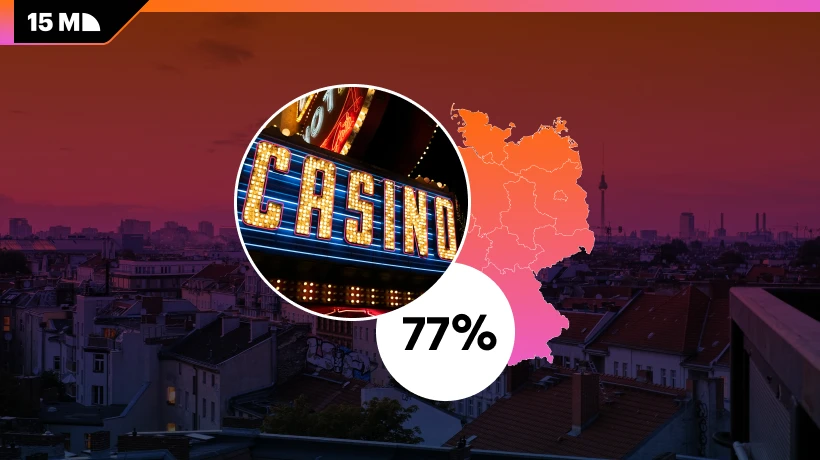

According to the Joint Gambling Authority of the Federal States (GGL), a study it commissioned found that unregulated online gambling accounted for 22.97% of market volume, implying a channelisation rate of 77.03% for legal operators. Ronald Benter, a member of the GGL board, said that these findings support the regulator’s previous assumptions regarding the black market.
The Significance of the Black Market Debate
Channelisation is at the core of the ongoing gambling policy debate in Germany. The argument of licensed operators and trade bodies is that overly regulated product offerings, betting limits, and advertising could drive players into the arms of offshore operators. The new study does not change this argument, but it does provide the regulator with another figure to work with as it continues with the treaty review. The GGL has already said that the findings will be used in discussions with the states over possible legal changes.
Through this announcement, the regulator also stressed that enforcement is an ongoing process, and it must address the full chain. That includes providers, payment services, platform structures, and marketing networks.
Player Protection Remains Central to the Review
Another notable data point comes from Germany’s 2025 Gambling Survey, which was also highlighted by the GGL during the Hohenheim symposium. The survey collected 12,340 complete interviews between 4 August and 26 November 2025. According to the results, 36.4% of respondents had participated in at least one paid form of gambling in the past 12 months. Also, 11.7% reported having gambled at least once a week.
The harm indicators did not disappear. Among the adult respondents between 18 and 70 years old, 2.2% were found to have met the DSM-5 criteria for gambling disorder. Males were found to have a higher rate of gambling disorder than females, at 3.2% and 1.1%, respectively. Among participants in specific product categories, online slots showed the highest disorder rate at 32.5%, followed by live sports betting at 27.0%.
Key Takeaways
The two studies point to the same policy reality. The German licensed market is capturing most online demand, but the strength of the current framework will also be judged by its ability to contain gambling-related harm. The next phase of the debate will likely focus on how far the legal market can scale and coexist with effective player protection.