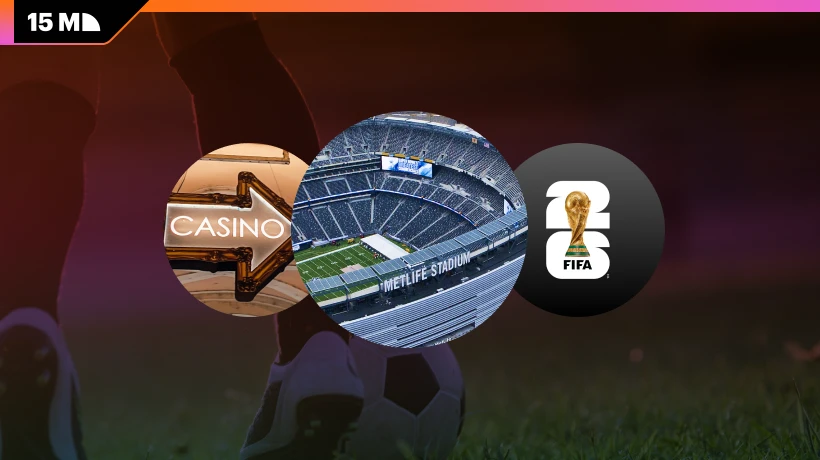

A brand-protection approach adopted by FIFA does not allow branding within and outside stadiums as well as above stadiums unless sanctioned by the organization itself. This implies that the stadiums named after corporations will be referred to by FIFA’s geographic venue names during the tournament.
Rules Go Beyond Simple Rebranding
One of the illustrative examples is the Hard Rock Stadium. This venue is to be called the Miami Stadium during the World Cup period. The AT&T Stadium will also revert back to being known as the Dallas Stadium. Among the 11 U.S. host venues, 10 are expected to use geographic names.
There is an exception, but it is only partial. The Mercedes-Benz Stadium in Atlanta will be referred to as Atlanta Stadium during the tournament. However, the logo on its roof may remain visible from above after FIFA accepted a technical exception.
Gambling Brands Are Among the Biggest Losers
The World Cup presents an ironic dilemma for U.S. betting operators and casino-linked brands. It is expected to be one of the biggest betting moments yet for the U.S. market. But it also marks a time when partnerships between sportsbooks and casinos tied to the hosting sites may lead to lost visibility when public attention peaks.
This impacts many sports venues that have commercial ties to gambling. Among them are stadiums associated with Caesars Entertainment, BetMGM, FanDuel, DraftKings, BetRivers, Wynn Las Vegas, and even tribal casinos. Some of the removals might be fairly easy if it involves digital branding. However, others will require significant effort and money if it means tearing down built-in signage.
What distinguishes Hard Rock is that it will not simply lose advertising space. Rather, its name will be stripped from the stadium branding altogether, making it the most obvious victim of FIFA’s approach.
A Bigger Event, but Fewer Brand Touchpoints
This is an inconvenient time for the US betting industry to undergo such a commercial reset. The 2026 World Cup, co-hosted by the U.S., Canada and Mexico, will be the first edition played in the U.S. since legal sports betting spread across much of the country. The tournament involves 48 teams and 104 games, making it a prime target for acquiring new customers.
However, FIFA’s model puts that value at the center of its own partner ecosystem. Although the organization does not seem to have a regular partner in the form of a U.S.-based sportsbook, it has chosen Stat Perform as its official partner for betting data and services.
The broader message to the market is that FIFA sees the World Cup less as a joint marketing platform and more as a rights-driven commercial product.