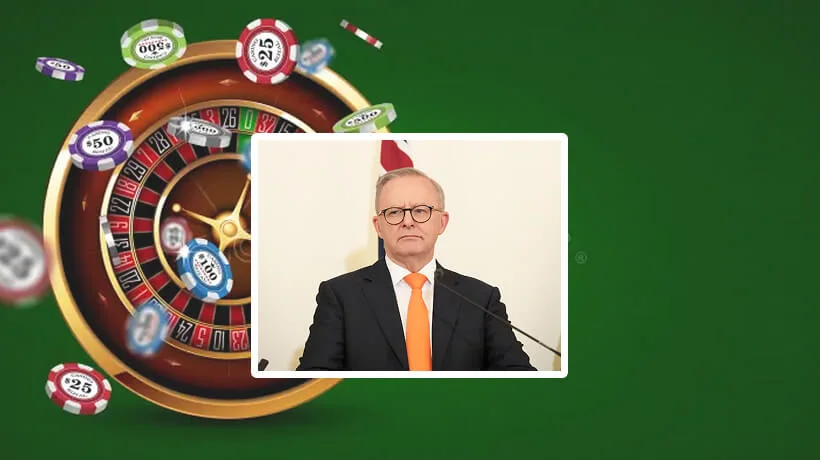

Instead, he defended his government’s current approach, saying they don’t “make policy on the run.”
Albanese drew a distinction between recreational betting and problem gambling. He said “people having a punt on the horses on Saturday” is part of acceptable behaviour in Australia.



Why Offshore Concerns Drive Policy Hesitation
The Prime Minister stressed the risk of unintended consequences. Banning ads could push players to offshore sites, which operate without taxes or regulations. “What is in our mind is the practicalities of whether people just go offshore, then there’s no revenue at all and it doesn’t solve the problem,” Albanese explained.
These offshore operators also present challenges tied to global gambling platforms and crypto-linked scams, making regulation more complex.
What Measures Already Target Gambling Harm
Albanese highlighted his government’s existing harm-reduction tools. BetStop, the national self-exclusion register, has already shown success in blocking problem gamblers. Credit card restrictions on online betting are also in place.
However, the PM pointed out that poker machines cause the greatest harm in Australia, more than ads or sports betting. He left the door open to advertising restrictions but said the government won’t rush decisions.
How Current Enforcement Actually Works
The Australian Communications and Media Authority (ACMA) continues to block unlicensed offshore gambling websites. Hundreds of domains have already been restricted.
Authorities are also monitoring underground cash networks and scams tied to betting. The government’s approach is aimed at harm reduction rather than blanket bans, with a focus on protecting vulnerable players.
Albanese’s comments show that while gambling ad restrictions aren’t off the table, any change will come through careful policy development, not quick fixes.