The New Rules of Brand Power

How Brands Build Trust, Relevance and Longevity
Marketing is changing fast, but not in the way most brands think. The challenge is no longer just visibility. It is credibility.
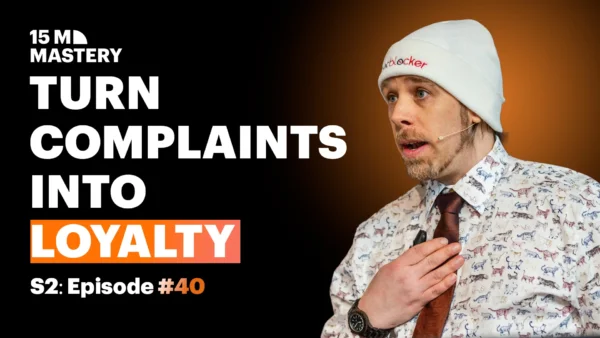
In this episode of 15M Mastery, Valentina Diaco, strategic marketing advisor and founder of AI Match, talks about how brands need to evolve as AI reshapes discovery, trust and customer expectations. Her core argument is simple: the brands that grow will not be the ones shouting the loudest. They will be the ones that are clear, consistent and easy to trust.
Value propositions are no longer enough
For years, many gaming brands competed on familiar claims: better products, better service, faster support. Valentina argues that this is no longer where differentiation happens.
Consumers want more than features. They want to understand what a brand stands for, who it is for, and what kind of experience it creates. In other words, the strongest brands are no longer built around product messaging alone. They are built around identity, meaning and relevance.
“Consumers don’t just want to know what you make, they want to know what you stand for and how you make them feel.”
That shift matters even more in iGaming, where many offers look similar on the surface. When products start to blur together, brand meaning becomes the real advantage.
In an AI driven market, trust becomes visible
Valentina also points to a deeper structural change. Technology is making marketing more transparent.
Advanced analytics, AI visibility signals and more verifiable attribution models are making it harder for brands to hide behind vanity metrics or polished narratives. Reputation is becoming easier to read across channels, mentions and trust signals. That means brand equity is no longer just claimed. It is increasingly exposed.
This is why trust is starting to behave like a business asset rather than a soft brand concept. Valentina links it to measurable signals such as lifetime value, advocacy, retention and brand search behaviour. The commercial effect is clear: trusted brands hold customers longer, recover better from mistakes, and create stronger referral momentum.
“A trusted brand that makes a mistake gets the benefit of the doubt. A low trust brand gets cancelled.”
Authenticity still matters, but it has to survive the algorithm
One of the strongest points in the conversation is Valentina’s view on authenticity. She pushes back against the idea that brands must choose between being real and optimising for distribution.
Her definition is much more practical. Authenticity means consistency between what a brand says and what it does across every touchpoint. That consistency becomes even more important when content is increasingly shaped by automation and AI systems.
“The best content is both strategically crafted to perform well and rooted in genuine brand values and real customer insight.”
That balance is where many brands will struggle. Some will chase platform logic. Others will insist on brand purity without adapting to how discovery now works. Valentina’s point is that neither extreme wins. Brands need to understand what customers need first, then package that value in a way that AI systems can surface.
The brands that last will be both searchable and believable
By the end of the conversation, Valentina narrows the future down to three traits: clarity of purpose, speed of adaptation and human credibility. These are the qualities she believes will define the brands that stay relevant as the market becomes more automated and more crowded.
Her final point is probably the clearest summary of the episode. The future will belong to brands that can be retrieved by AI and believed by people at the same time.
That is the real shift in marketing. Visibility still matters. Performance still matters. But in a market shaped by AI, neither means much without trust.