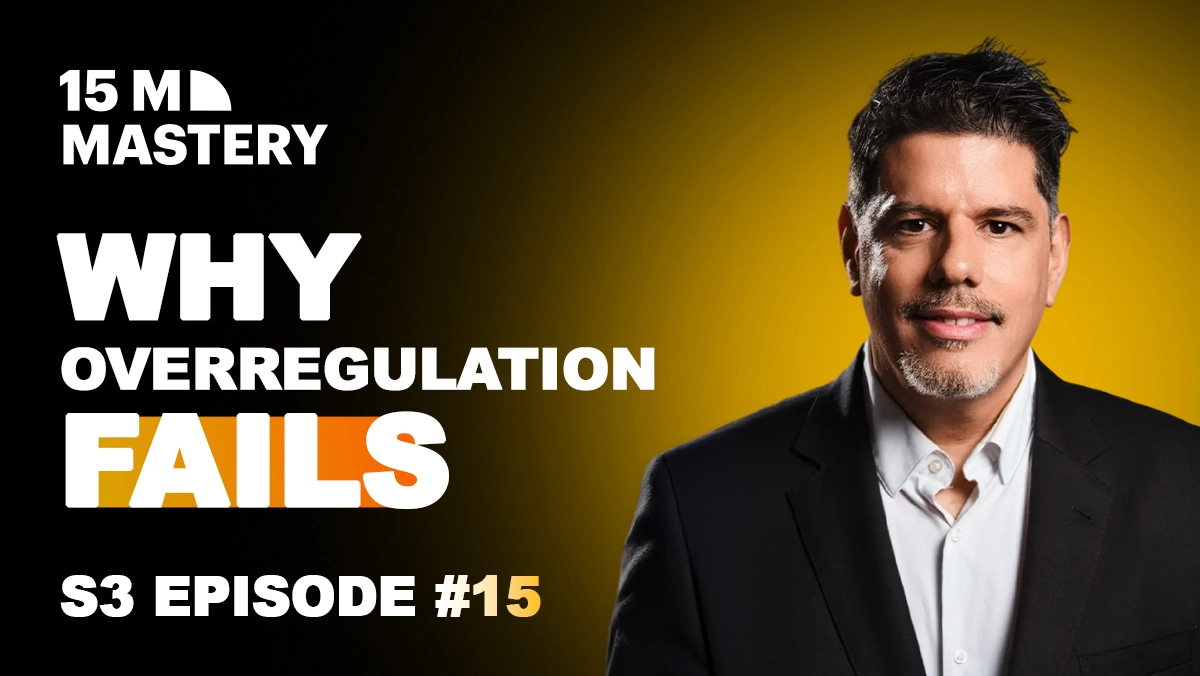
How Latin America Can Build Competitive Gaming Markets Without Fueling the Black Market

The Regulation Paradox
A seasoned industry executive recently highlighted a critical contradiction: "Politicians are smart enough to understand that companies that comply... are part of the solution, not part of the problem. While unregulated that don't do any of that are basically the problem."
Ramiro Atucha, former CEO of Leander Games and Vibra Gaming, argues that Latin America's rush to regulate iGaming is making a fundamental error: over-taxation and restrictive rules are crippling licensed operators and inadvertently strengthening the illegal markets they seek to replace. He joined a webinar to dissect the regulatory challenges and chart a path toward sustainable, competitive markets.
The Fragmented Regulatory Landscape
Latin America is not a monolith. Each country is forging its own path, creating a complex patchwork of rules that strains international operators.
“Everyone is taking it in a different way,” Atucha explains. He points to Argentina’s state-by-state model, Brazil’s nationwide framework clashing with local jurisdictions, and countries like Peru and Colombia with centralized regulation. “The challenge is that it sometimes feels that there hasn’t been an in-depth analysis of what worked and what did not work in other countries.”
This fragmentation creates confusion and a dangerous blurring of lines between regulated and unregulated activity. When problems like underage gambling arise, the blame often falls on gambling as a whole, rather than on the unlicensed operators who bypass all consumer protections.
A Cautionary Tale
The most significant threat to healthy markets, according to Atucha, is the failure to learn from other regions’ mistakes. He points to Europe as a stark warning.
“You’re seeing the unregulated, the black market in Germany grow,” he states, citing increased taxes and restrictions that forced operators to lower game RTPs. “I’ve never seen a country where the citizens are so proud to pay their taxes… Reaching the point where you can push Germans to play in unregulated casinos. It’s insane.”
He sees the same misguided tactics emerging in Brazil. “Why don’t you take a moment and see how that worked out for Germany, for France…? I appreciate it’s not fun for a politician to be labeled as friend of the casinos… But in reality, if you look at all the countries and all the new laws that are against the casinos, they’re actually pushing the place to unregulate it.”
Bridging the Promise vs. Reality Gap
A major trust issue arises from the gap between regulatory promises and operational reality. Sudden policy shifts destabilize the market and deter long-term investment.
“The biggest gap is what they stated initially,” Atucha says, referencing Brazil’s expensive licensing process. “A lot of companies invested in getting a license, a very expensive license… under certain terms that are now discussed to be changed. So that’s also an element that slowed and made hit pause any M\&A conversations.”
This uncertainty undermines the industry’s ability to present itself as a responsible partner. Atucha advocates for a proactive communications strategy that highlights the jobs created, taxes paid, and stringent player protections—like certified games with transparent RTP—that define the regulated sector.
The Platform Dilemma
For content and platform providers, regulatory diversity creates a significant technical challenge. Designing a one-size-fits-all product for disparate markets is nearly impossible.
“It’s making it very challenging because there’s not one unified thing,” Atucha notes, listing different requirements for facial recognition, reality checks, and promotional rules across countries.
He challenges the prevailing wisdom of global platform consolidation. “I do see an effort of big companies to have one platform covering everything… And I think that’s a mistake.” His solution? “If you have a US-facing platform and you want to enter Latam, you need to have a Latam platform that caters to Latam with a separate development team.” This approach allows for the specialized focus required to navigate local complexities effectively.
Enforcement and Sustainable Rules
The current environment encourages a dangerous duality, where even regulated operators maintain a presence in unregulated spaces to subsidize costly compliance efforts.
“The problem is that they feel the need of financing their efforts when they’re regulated with the profit that they make on unregulated,” Atucha observes. He proposes a simple ethical test for operators considering this risk: “If this filtered, can you defend it?”
The ultimate solution requires a two-pronged approach: robust enforcement against illegal operators and a regulatory framework that allows licensed companies to be competitive. Atucha also calls for a industry-wide debate on responsible advertising, noting that excessive marketing by regulated firms can drive underage players directly to the unprotected black market.
The next big shift, he predicts, will be normalization. “When regulation normalizes and when we manage to have clear rules that are going to be sustainable… there’s going to be an M\&A activity.” Success will depend on a symbiotic relationship: global operators providing technology and capital, and local partners contributing indispensable market knowledge and presence.
Have you enjoyed the post?
Persona