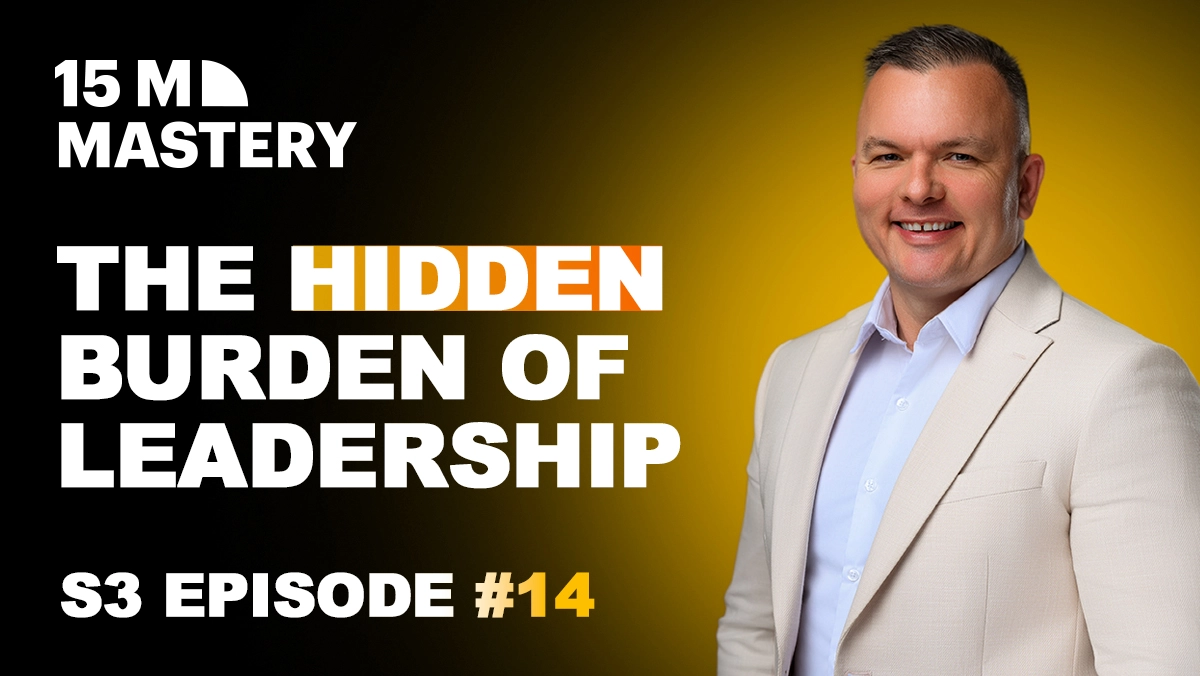
How Leaders Can Overcome the Isolation of Leadership

The Burden of the Top
A veteran industry leader recently highlighted a universal truth for those in charge: "The higher you go, the thinner the air gets."
Leo Judkins, founder of iGaming Leader and a 17-year industry veteran, works directly with VPs, directors, and executives to tackle the unspoken challenges of leadership. He joined a webinar to dissect the hidden burden of isolation that plagues high-performers, arguing that the weight of decision-making, not the hours worked, is what truly leads to burnout and loneliness at the top.
The Walls of the Corner Office
Leadership isolation isn’t just about being alone; it’s about a fundamental shift in every workplace relationship. Genuine connections become rare as interactions become increasingly transactional.
“People that talk to you, that report into you kind of always want something,” Judkins explains. He recalls his own early career anxiety when speaking to a CEO, feeling like “a deer in headlights.” Now, from the leader’s perspective, he sees the flip side: “You experience that, you see that people change their expression and the way they talk and how they tense up. And that becomes really isolating.”
This dynamic creates an environment where leaders are surrounded by people yet starved for authentic, non-posturing conversation. The problem is compounded by the necessity of making decisions that cannot be fully explained to the team, such as impending redundancies or cash flow concerns, creating an unavoidable distance.
The Unseen Risks of Leading Alone
The greatest danger of isolation is the loss of perspective. Without a trusted circle to provide challenge and feedback, even the smallest miscalculation can lead an organization astray.
“You can’t read the label from inside the bottle,” Judkins notes, using a powerful analogy. “As a leader, you don’t really get challenged anymore.” Some leaders may even misinterpret challenge as disrespect, but this absence of pushback is a critical vulnerability.
He references James Clear’s “Atomic Habits” to illustrate the point: a one-degree change in an airplane’s course leads to a completely different destination a thousand miles away. “You don’t realize that you’re making a one degree change when it’s happening,” Judkins says.
“When you make good decisions and you get outside perspective… it creates huge revenue opportunities when you extrapolate it to the future.” The risk isn’t just failure; it’s missing out on monumental success.
Recognizing the Weight, Not the Hours
Contrary to popular belief, burnout is not a simple function of long hours. The real culprit is the emotional and mental burden those hours carry.
“The problem starts happening not because of the hours, but because of the weight of the hours,” Judkins clarifies. He shares an example of an executive who burned out working only 20 hours a week because the psychological load was so immense. “It was the weight of those hours that burnt him out.”
Early warning signs include:
• A loss of passion and interest in the work
• Feeling that every task is heavy and intense
• Chronic overthinking and lying awake at night with a racing mind
Building a Pyramid of Support
The solution to isolation is counter-intuitive for many high-achievers: it requires proactively building a support system. Leaders must realize they are not at the top of a single, lonely pyramid, but part of a landscape of many pyramids.
“It starts with realizing that there’s many pyramids,” Judkins explains. The goal is not to offload decision-making, but to find a confidential space to discuss those decisions with peers who understand the context. “It doesn’t mean that you can’t talk to anybody about that… But now he has a place to discuss those decisions with somebody else and get some feedback and have a group around him that supports him.”
This tribe should consist of industry peers, not life partners or friends, who can offer relevant experience and unbiased counsel.
The Path to Resilient Leadership
Long-term resilience is built not through solitary strength, but through connection. Judkins grounds this in human biology, noting that we are not built to thrive in isolation.
“The thing that builds resilience against isolation long-term is to stop being isolated,” he states plainly. “We are not built to be alone and to… carry all of that alone.”
In an “always-on” culture, this requires intentional practices to disconnect and recover. The key is not relentless discipline, but recognizing the signs of distraction and permitting oneself to truly switch off. This allows leaders to return to their responsibilities with renewed focus and energy, turning the solitary burden of leadership into a shared, and sustainable, journey.
Have you enjoyed the post?
Persona