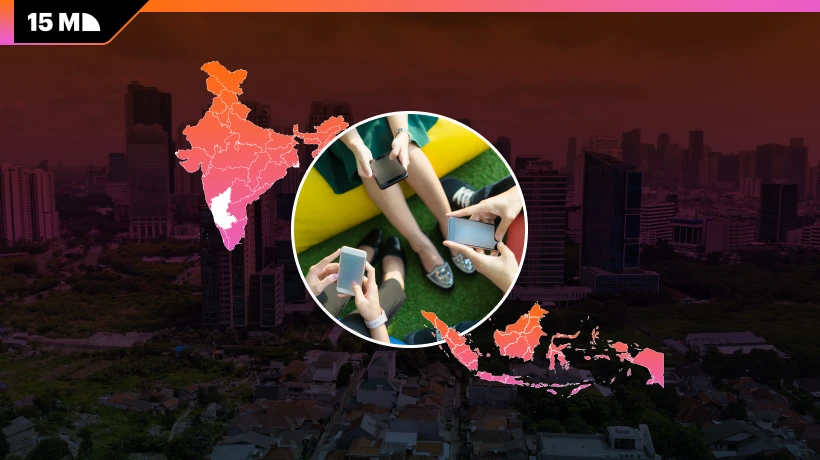

Asia is now contributing new examples to the trend of governments focusing more on how kids use social media. The plan is almost ready for official adoption in Indonesia. Although the policy has been politically announced in Karnataka, the operational details are still lacking.
The approaches differ in two countries, but stronger regulatory pressure on tech companies is what they have in common.



Indonesia Takes a Risk-Based Route
Indonesia is not planning to outlaw all minors. Rather, authorities are developing a tiered model that connects age restrictions to each platform’s perceived risk. Higher-risk platforms would be subject to a more stringent age limit, and lower-risk services might continue to be accessible to kids 13 years of age and up.
On March 28, 2026, the regulation is anticipated to be signed. In order to give platforms time to modify their systems and prepare age-checking tools, enforcement is scheduled about a year later.
Major Platforms Fall Into the Higher-Risk Category
A number of widely used services will be regarded as higher-risk products, according to Indonesian officials. YouTube, TikTok, Facebook, Instagram, Threads, X, Bigo Live, and Roblox are all on the list. The minimum age for those platforms would be 16.
The message from the government is that platforms, not families, should bear the burden. Future penalties, according to Meutya Hafid, Minister of Communication and Digital Affairs, will target businesses that violate child protection laws rather than children or parents.
Youth Usage Levels Help Explain the Timing
The government’s actions make more sense when one looks at Indonesia’s own numbers. Officials say that about 299 million people in the country use the internet, and almost 80% of kids are online. At that level, child safety becomes a big issue for everyone.
Authorities have also talked about specific risks that come with the move. Potential dangers, according to the officials, include harmful content, contact with strangers, exploitation, and unhealthy patterns of digital dependence.
Karnataka Signals a Harder Line
The state of Karnataka seems to be thinking about a ban on social media for kids under 16. During the state budget speech, Chief Minister Siddaramaiah brought up the idea and connected it to worries about how using cell phones might affect children.
Karnataka hasn’t said yet how it would enforce such a rule, unlike Indonesia. There are still questions about age verification, platform responsibility, and the practical reach of state-level action. Reports also suggest tech companies were not consulted before the announcement.
Conclusion
Regulators are no longer ignoring kids’ use of social media. While Karnataka is taking a tougher political stance, Indonesia is trying out a compliance model that is more structured. This is another sign for platforms that rules about youth access are becoming a real regulatory issue.