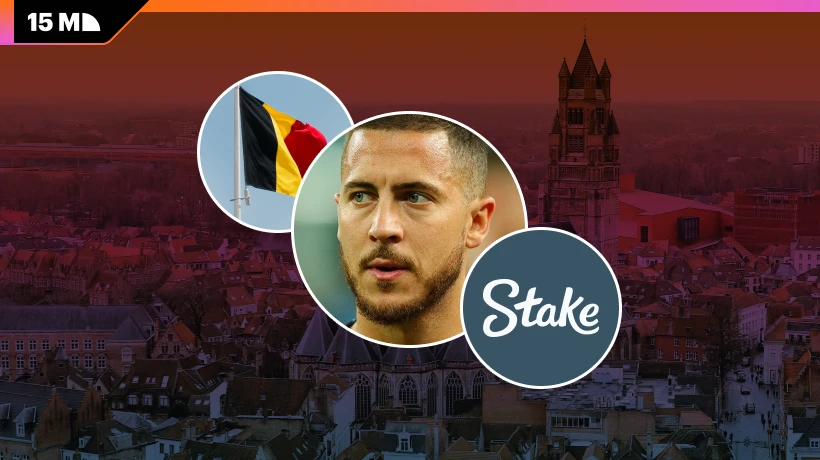

The Belgian Gambling Commission is considering whether the promotion of Stake by Hazard amounts to advertising targeting consumers in Belgium. The country prohibits gambling unless it is explicitly authorized, and the regulations around advertising have also been strengthened through a royal decree that came into force on July 1, 2023. The Commission also publishes an official list of illegal gambling sites it blocks.
Thus, the Hazard case goes beyond the celebrity brand alliance. A campaign may be launched as global in intent, but social media does not follow national borders in the way that regulators do. If the Commission finds that the Belgian audience is being targeted in a manner that constitutes illegal promotion, then the matter is no longer about marketing strategy but about enforcement. According to Belgian media outlets, Hazard may be ordered to stop the promotion if the authorities find that the campaign is targeting the Belgian market.



A Global Campaign With Local Exposure
Stake announced Hazard as a global ambassador recently, saying that the star would appear in international marketing campaigns and fan engagement efforts ahead of the 2026 World Cup. The operator emphasized Hazard’s social media reach, which includes more than 27 million Instagram followers. That helps explain the speed with which the news about the deal is drawing attention. What may seem commercially logical for a global operator brings legal exposure in more heavily regulated markets.
Hazard’s status also brings another dimension. He retired from football in October 2023, but then entered the Premier League Hall of Fame in 2025 following a career with Chelsea, scoring 85 league goals. This gives him strong credibility with football fans at a time when Stake, like many other betting operators, is rolling out campaigns ahead of the extended 2026 World Cup, the first tournament to feature 48 teams in Canada, Mexico, and the US.
Broader Implications of the Case
The broader question is whether regulators can still consider ambassador campaigns to be separate activities in each territory. A video distributed globally in an instant may be accessible in restricted markets, particularly if the person in the clip is one of the country’s most famous athletes.
From an industry perspective, this is the real interest in the case. Belgium’s focus, therefore, extends to more than one endorsement campaign. The regulatory authorities appear to be testing the relevance of domestic gambling laws in the context of global sports figures and borderless distribution. Even if the case is resolved without any significant sanctions, it is a reminder that the label “global” may no longer shield a campaign from local scrutiny.