
Spotting value bets is more about opportunity than just luck. People who bet often watch for moments when bookmakers set odds that don’t match the real likelihood of an event occurring. The main point is focused on a positive result. If you think your chances are better than what the bookmaker shows, you’re in a good spot. This method works well in sports markets all over. Sometimes, bookies mess up the odds due to what people think or strange market trends. Pro bettors build their own models for probabilities and compare them with the odds they see. The plan focuses on building steady profits through different investments rather than chasing quick gains. To get ahead, you need to understand the odds and put them into action consistently. These differences create opportunities where the chances lean more towards the bettor.
The main idea behind the concept
Understanding the basics helps bettors make smarter decisions. These key points distinguish value-focused strategies from merely gambling for enjoyment and stress the role of math instead of allowing emotions to sway one’s view of outcomes.
- Instead of only focusing on predicting the result, think about the opportunities. You should assess results in percentages rather than just seeing wins or losses. You can see how probable each result is by checking the stats and taking a close look at the analysis;
- Implied and true probability: Bookmaker odds indicate implied chances, but these often differ from the real possibilities;
- Think about the long match – Every single bet can go either way, but if you consider the overall good odds from placing many bets, you’ll notice a profit in the end. Only focusing on short-term results doesn’t truly reflect how effective this method is;
- Labels aren’t that important. It doesn’t really matter if a team’s labeled as the favorite or the underdog when you’re trying to understand its real value. You consider the actual odds of winning, regardless of what others believe or how famous the team is;
- Getting a good price is more important than being loyal – the discounts you find mean more than your favorite brands or teams. To make money from betting, you need to focus on the numbers rather than getting too attached to specific teams.
Odds formats and implied probability basics
Understanding how bookmakers present odds and convert them into probabilities is essential for spotting value. Check out the table below that shows the various formats and calculations bettors use to spot price differences.
| Odds format | Example odds | Implied probability | Fair odds if your probability is higher |
|---|---|---|---|
| Decimal | 2.00 | Bookmaker suggests 50% probability calculated as 1 divided by 2.00 | If you assess 55% probability, then fair decimal odds should be 1.8 |
| Decimal | 3.50 | Bookmaker suggests 28.57% probability calculated as 1 divided by 3.50 | If you assess 35% probability, then fair decimal odds should be 2.86, showing value |
| Fractional | 6/1 | Bookmaker suggests 16.67% probability calculated as 1 divided by 6 total parts | If you assess 20% probability, then the fair fractional odds should be 5/1, indicating value |
| American | +200 | Bookmaker suggests 33.33% probability calculated as 100 divided by 300 total | If you assess 40% probability, then the fair American odds should be +150, indicating value |
Positive expected value explained with simple math
Understanding the math that drives successful betting can help you make smarter decisions. Expected value is an easy method to determine if a bet will be profitable over time.
- To get the bookmaker’s implied probability, simply convert their odds into a percentage.
- Check out the research and take a good look at the stats to find out your real odds.
- Apply the standard EV formula: EV = (Actual Probability × Odds) – 1.
- Type in your real chance as a decimal (like, 60% would be 0.6).
- Just take this decimal and multiply it by the odds that the bookmaker has for that result.
- Subtract 1 from the result to find what you expect.
- Consider EV > 0 as a hint that there could be long-term profit ahead.
An EV of 0 shows it’s a break-even bet with no edge. Realizing that EV < 0 means it’s a bad gamble that will end up costing you money in the long run. Only place bets when the numbers indicate a positive expected value greater than zero.
Main types of bookmaker odds mistakes
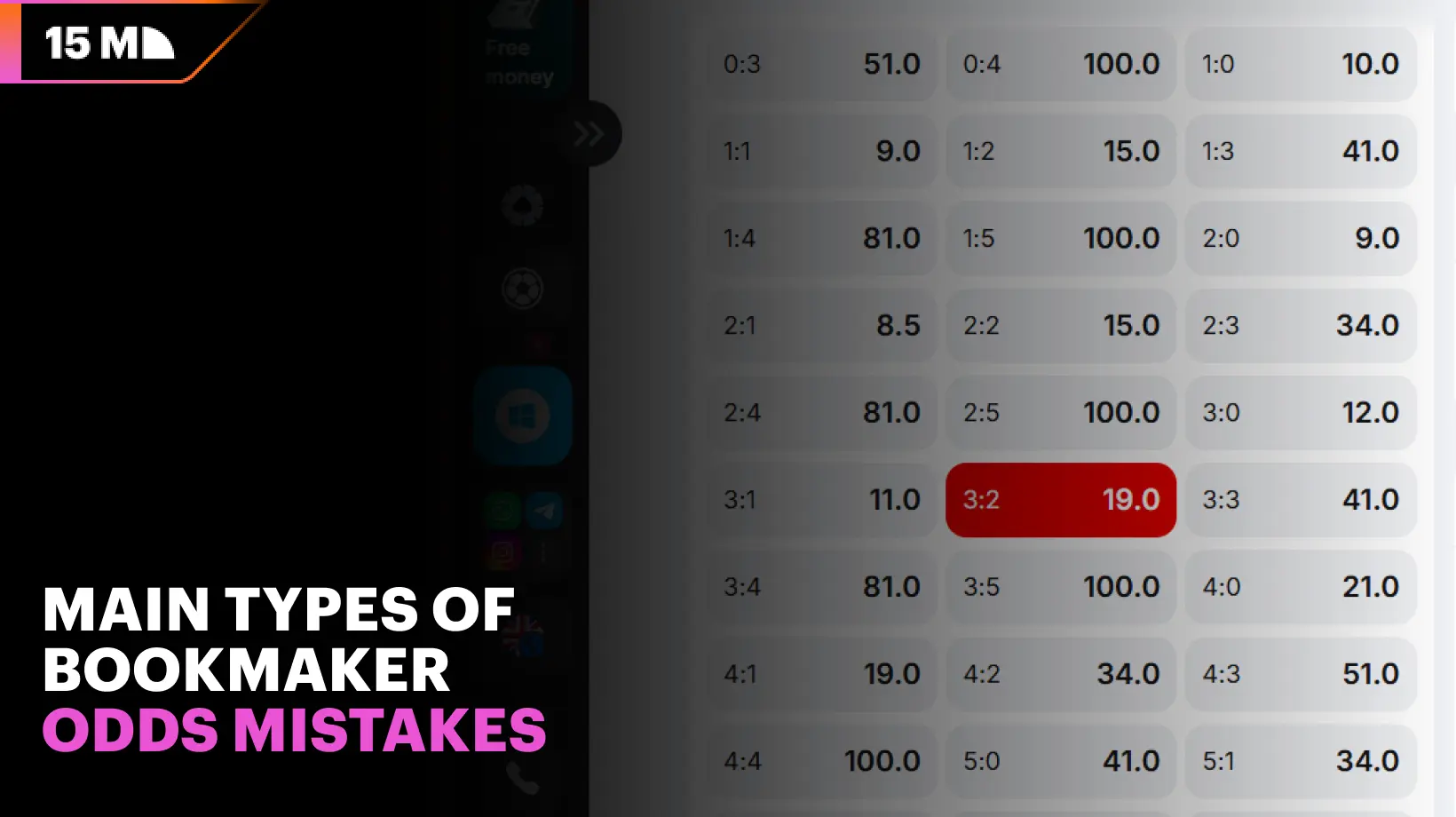
Bookmakers sometimes mess up their odds in ways that create real opportunities for savvy bettors. These mistakes can happen for various reasons, and each one requires its own method to recognize and make the most of the price differences.
| Type of mistake | Typical indicator | How a bettor can exploit it |
|---|---|---|
| Public bias | Heavy betting action on popular teams creates artificially inflated odds on less-favored sides | Bet against public favorites when odds shift dramatically due to casual bettor money |
| Incomplete information | Bookmaker lacks timely access to late injury reports or unexpected lineup changes before odds are set | Research deeper data sources and act quickly before bookmakers adjust their lines |
| Slow adjustments | Line remains unchanged despite significant breaking news or notable market movement at sharp books | Compare odds across multiple bookmakers and bet stale lines before corrections occur |
| Overreaction to news | Odds swing excessively following headlines without proper consideration of the actual impact on outcome probability | Assess the true significance of breaking news and bet the overcorrected side for value |
Step-by-step process to find a value opportunity
A straightforward method lets you see great opportunities when bookies offer lower odds on specific outcomes. This useful workflow covers everything from the initial research to making the final bet and tracking it later.
- Choose a sport or league that offers detailed stats, current performance information, and reliable sources.
- Get specific info on both teams, such as how they’ve played lately, their past matches against each other, any injuries, the weather forecast, and who’s likely to start.
- Check the actual likelihood of each result based on the data you’ve collected and how you’ve analyzed it.
- To get the implied probability from the bookmaker’s decimal odds, simply divide 1 by the odds and then multiply that result by 100.
- Look at your estimated chance and compare it with the bookmaker’s odds to see if there are any significant differences.
- Make sure you truly have the upper hand by checking if your chances are actually better than the odds indicate.
- Make sure to check for a solid expected value before placing your bet.
- Track how your bets perform and jot down your estimated odds next to the actual outcomes. This will help you get better at predicting outcomes in your future models.
Key data and factors to estimate true probabilities
To build reliable probability models, you should consider different factors that bookmakers might overlook or underestimate. Every factor impacts the actual odds of match results and helps identify opportunities for value.
- Team form: Recent results reveal how teams are performing and whether bookmakers are misjudging certain sides;
- Injuries: Losing important players can really affect the chances of winning, especially since bookmakers set their lines before they get the latest injury news;
- Schedules: Playing too many matches can drain the team’s energy, which makes them decide to rotate players and affects how competitive the matches turn out;
- Travel: Long journeys can drain your energy and mess with your body clock, which really makes it tougher for the team to function well together;
- Motivation: Teams facing relegation battles or competing for titles tend to perform better than their usual season average;
- Tactics: Certain matchups fit certain playing styles better and show advantages that regular stats might miss;
- Weather: whether it’s rain, wind, extreme heat, or cold, it usually helps teams with specific skills;
- Historical matchups: Checking head-to-head records can show the mental advantages or style variations between the teams;
- Statistical models: Metrics like expected goals and defensive ratings show clear opportunities for different results.
Using market comparison to spot mispriced lines
Different prices from bookmakers can point you to great deals. This approach lets you distinguish between actual mispricing and normal market shifts, helping you see when the odds are truly in your favor.
- Set up accounts with 5 to 7 different bookmakers so you can find a range of odds for the same event;
- Get the odds from each bookmaker and put them in a spreadsheet to compare the prices easily;
- Get the average odds from all the bookmakers to establish a basic market agreement;
- Look for any bookmaker whose odds differ by more than 5-8% from the average you’ve figured out;
- Check out the odds from leading bookmakers such as Pinnacle; they often display the most reliable sports market odds;
- Take a look at the outlier odds next to the sharp line and see if there’s actual mispricing.
- Check for any differences of 10% or more from the sharp bookmaker odds as obvious signs of value;
- Only place your bet when the higher price aligns with solid confirmation from the bookmaker, rather than just following random ups and downs.
Closing line value and how it shows your edge
The closing line value is a key way for serious bettors to see how well they’re doing. This method compares your bet price to the final odds just before the sports markets close.
- Closing line value explained – This measure examines the difference between the odds you bet on and the final odds right before an event starts;
- Keep an eye on your bets: write down the odds for each one you make, then see how they compare to the closing odds at the sportsbook later on;
- Find your advantage – If you often see odds of 2.10 when the sports market closes at 2, you have a 5% edge over the final market assessment;
- Crossing that finish line first really shows your skill. Pro bettors can beat those lines more than 80% of the time, which means they find real value before the sports market catches up;
- Use this data to make smarter choices – Watch for which bet types, sports, or betting markets give you the best closing line value. This lets you focus your efforts where you really stand out.
Bankroll and betting approach for value-oriented bettors
Good money management helps protect your cash while you grow your profits over time. Picking the right betting method helps you handle the highs and lows that come with this approach.
- Flat stake approach: Bet the same amount every time you see a chance, regardless of how much you think you could win;
- Percentage-based stakes: Bet 1-3% of your total bankroll each time to manage your risk as your funds fluctuate;
- Tolerance for variance: It’s perfectly normal to hit a streak of 10-15 losing bets in a row, even if you think you’ve found solid value;
- Avoid overbetting: Try not to bet more than 5% of your total bankroll on a single stake, even if you feel really sure about it;
- Record every bet: write down the size, the odds you received, the outcome, and the final result in a spreadsheet so you can see how you’re actually doing;
- Consistent stake sizing: Don’t increase your bets after a win, and don’t try to make up for losses by betting more.
Frequent mistakes when searching for overlays
Bettors often hurt their own value strategy by making mistakes they could easily avoid, and these problems usually add up over time. These common mistakes slowly erode the math edge you need for long-term gains and can turn promising chances into losses.
- Misjudges probabilities: It estimates the likelihood of winning without reliable stats or information, which creates a false sense of value where there isn’t any;
- Overreacts to small edges: Thinks a mere 2% edge means easy profit, but those little edges need hundreds of bets to actually show results;
- Ignores sample size: It draws conclusions from just 15 bets instead of 500, which can make normal fluctuations look like a complete collapse;
- Chases losses: Bumping up bets after a loss to quickly recover money often messes up bankroll management and results in making bets that aren’t truly worth it;
- Relies on gut feeling: Picks choices based on a hunch rather than data, missing the statistical backing that a solid strategy requires;
- Copies others blindly: Takes advice without looking into it themselves, so the situation might have shifted, and it’s likely that the value has disappeared from the market.
Worked example of calculating a value situation
This calculation shows you how to spot a good opportunity in real life. This breakdown walks you through how a bettor figures out positive expected value in real life. Let’s imagine the match between Manchester United and Liverpool:
- Choose Manchester United against Liverpool, picking Manchester United to come out on top.
- Look at the team stats and guess that Manchester United has a 35% chance of winning this match.
- Check out the bookmaker that has decimal odds of 3.20 on Manchester United to win.
- To find the implied probability from the bookmaker’s odds, just use the formula 1 divided by 3. 0.2 equals zero. 33.3%, or just 33% (0.3 equals zero as well).
- To find the expected value, use this formula: EV = (0.33 * 3.2) – 1 equals 0.056. This means you can expect to get a positive return of 5% for every dollar you bet.
Tools and models used by more advanced bettors
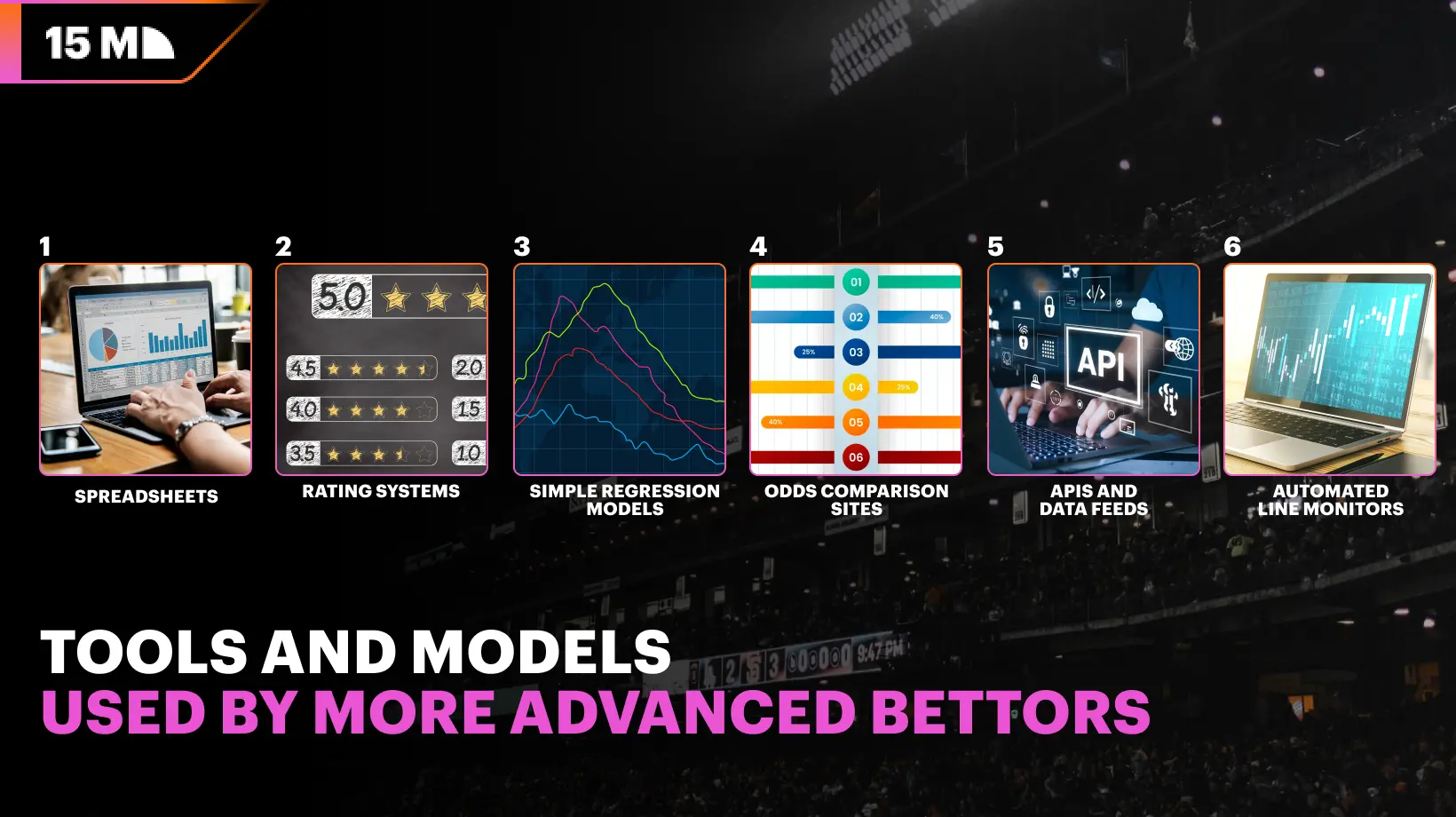
Smart bettors find different tools and methods to quickly identify good value chances. These tech tools manage large amounts of data and track changes in odds from different sources as they come up.
- Spreadsheets – gamblers use Excel or Google Sheets to sift through old data, calculate odds, and monitor their betting results in various sports and betting markets;
- Rating systems: these methods assign scores to teams or players based on their performance, the toughness of their schedule, and how they’ve done against one another;
- Simple regression models help predict outcomes by examining how various factors relate to each other, such as average scores, defensive efficiency, and home-field advantage;
- Odds comparison sites are handy tools that collect betting lines from different bookmakers, which makes it easier for you to find the best price for a particular bet;
- APIs and data feeds automatically send live stats, injury updates, and odds changes directly to the systems that bettors use for their analysis;
- Automated line monitors are tools that watch for changes in odds constantly and alert bettors when specific conditions or limits are met across various markets.
Advantages and Drawbacks of This Strategy
This approach has obvious upsides and downsides that every bettor should understand before jumping in. Take a look at the table below that shows the key pros and cons of this method.
| Advantages | Drawbacks |
|---|---|
| Provides long-term profitability when applied consistently across many bets | Creates a higher variance that leads to unpredictable short-term results |
| The mathematical framework offers objective and logical decision criteria for selections | Requires significant time investment for research and comprehensive odds comparison |
| Builds a systematic edge over bookmakers through detailed probability analysis | Demands advanced statistical skills and accurate probability assessment knowledge |
| Data-driven methodology removes emotional bias from the bet selection process | Psychological challenge with loss acceptance despite a correct long-term strategy |
| Repeatable process compounds returns over extended periods in 2026 | Needs strict mental discipline to stick with a value-focused approach only |
FAQ
How often do I need to win for this method to work?
Success depends more on having a solid expected value than on any specific overall win rate. A 40% success rate can still bring in decent profits, as long as your average edge is strong. It’s important to keep a steady, positive mindset with every bet you place.
Can value-focused betting guarantee profits?
No betting method can guarantee a win every time. If you maintain a steady positive outlook, have enough volume, and stick to your plan, you’ll improve your odds of getting real long-term gains. Short-term ups and downs are expected, but if you take the right approach, you’ll see a mathematical edge grow over time.
How many value bets should I place per day or week?
You can place any number of bets; there’s really no limit. Bettors should focus more on quality instead of just quantity. Only place your bets when you see a clear price edge. A solid option with decent chances is better than a lot of weaker selections.
What is the difference between arbitrage and value betting?
Arbitrage lets you make a small, low-risk profit by placing bets with different bookmakers on various outcomes. Value betting comes with the normal risks of a match, but it aims to make money over time by consistently betting on results that bookmakers get wrong, which leads to better odds.